
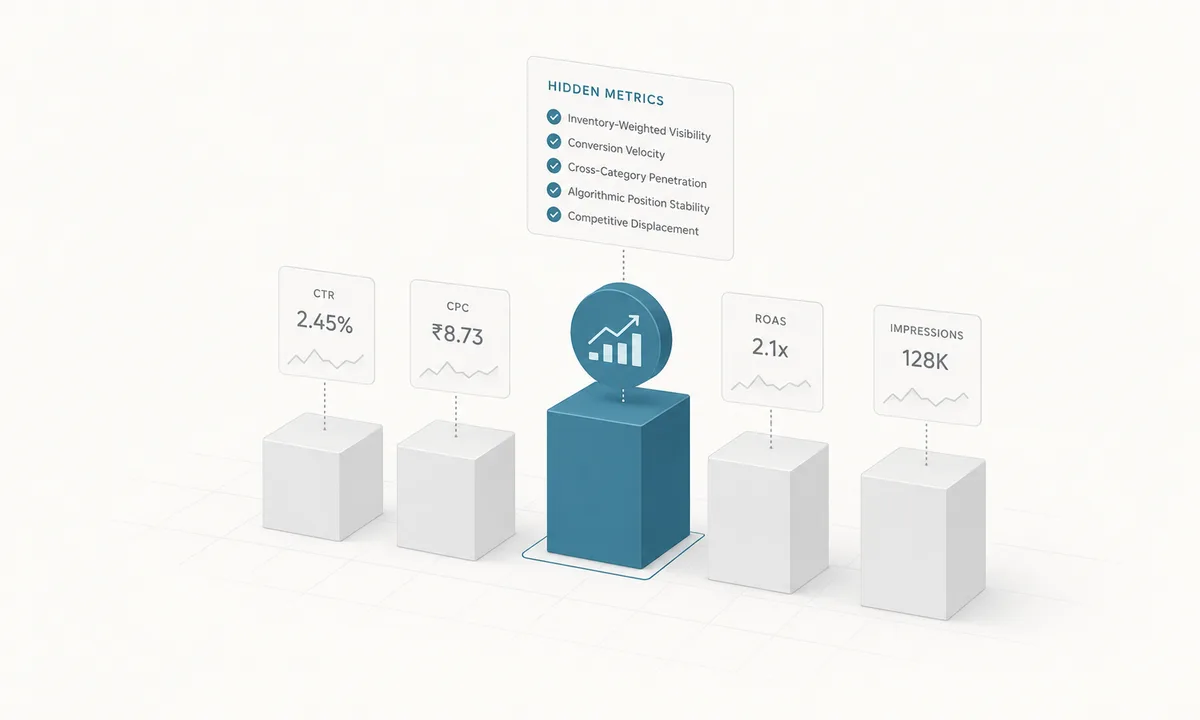
Most Q-commerce dashboards light up with click-through rates and cost-per-click, often distracting from what really matters. CTR may tell you how many people clicked your ad, but it doesn’t reveal whether they bought, whether they’ll come back, or whether they’re actually profitable customers. In Q-commerce, where intent to purchase is already high, CTR is more vanity than value. The brands that win aren’t the ones chasing clicks — they’re the ones measuring what truly drives sustainable growth.
The Real Success Predictors: Five Metrics That Matter
1. Inventory-Weighted Visibility
Being visible only matters if you can actually fulfill the demand. Tracking ad impressions alongside real-time stock levels ensures your visibility translates into revenue, not frustrated customers.
2. Conversion Velocity
The time it takes for a customer to move from click to purchase completion is a powerful signal. Faster conversions suggest strong product-market fit and smoother buying experiences.
3. Cross-Category Penetration
Q-commerce thrives on repeat and diversified purchases. Measuring how often customers expand from a single category into multiple categories tells you more about long-term value than one-time conversions ever will.
4. Algorithmic Position Stability
Your ranking across search terms shouldn’t swing wildly day to day. Stable, consistent visibility signals brand strength and translates into more predictable growth.
5. Competitive Displacement
It’s not just about showing up — it’s about being chosen over competitors. Tracking how often your SKUs win in shared search results helps you understand and improve your real competitive edge.
Moving From Metrics to Action
Shifting away from vanity metrics like CTR requires more than swapping dashboards — it demands a fundamental change in how brands approach measurement and optimization in Q-commerce. Success doesn’t come from chasing isolated numbers but from building a system where every metric ties back to business outcomes.
The first step is setting up the right infrastructure. That means aligning ad performance data with inventory systems, customer journeys, and category-level insights. If your visibility isn’t matched with stock availability or if customer behavior is siloed, you’ll never get a complete picture. Infrastructure lays the groundwork for truth.
Next is analyzing patterns. Look beyond single campaign reports and ask: Which products convert fastest? Which categories drive repeat expansion? How stable are rankings over time? The answers reveal where growth actually compounds and where campaigns are simply burning spend.
With this understanding, it’s time to optimize for depth, not surface. Instead of reallocating budgets to campaigns with the highest CTR, shift spend toward those driving faster conversions, stable rankings, and cross-category growth. This not only reduces acquisition waste but also builds customer stickiness over time.
Finally, the real edge comes when you scale learnings across your portfolio. Insights from one SKU or category can inform others, creating a compounding advantage. When velocity, stability, and loyalty are optimized together, the result is resilience competitors can’t easily replicate.
Moving from metrics to action isn’t about abandoning dashboards — it’s about reprogramming them. By anchoring measurement in the signals that actually predict revenue, retention, and competitive strength, Q-commerce brands can transform marketing from a chase for clicks into a playbook for sustainable growth.
The Bottom Line
Brands optimizing for hidden metrics create sustainable competitive advantages because competitors can’t easily replicate what they can’t see. While others chase CTR improvements, you’ll be building algorithmic shelf preference, customer loyalty, and market share through metrics that actually predict success.
In Q-commerce, the metrics that matter most are often the ones measured least. Stop optimizing for vanity metrics that make dashboards look good but don’t drive business results. Start measuring what actually predicts success — and watch your competitive position transform.