
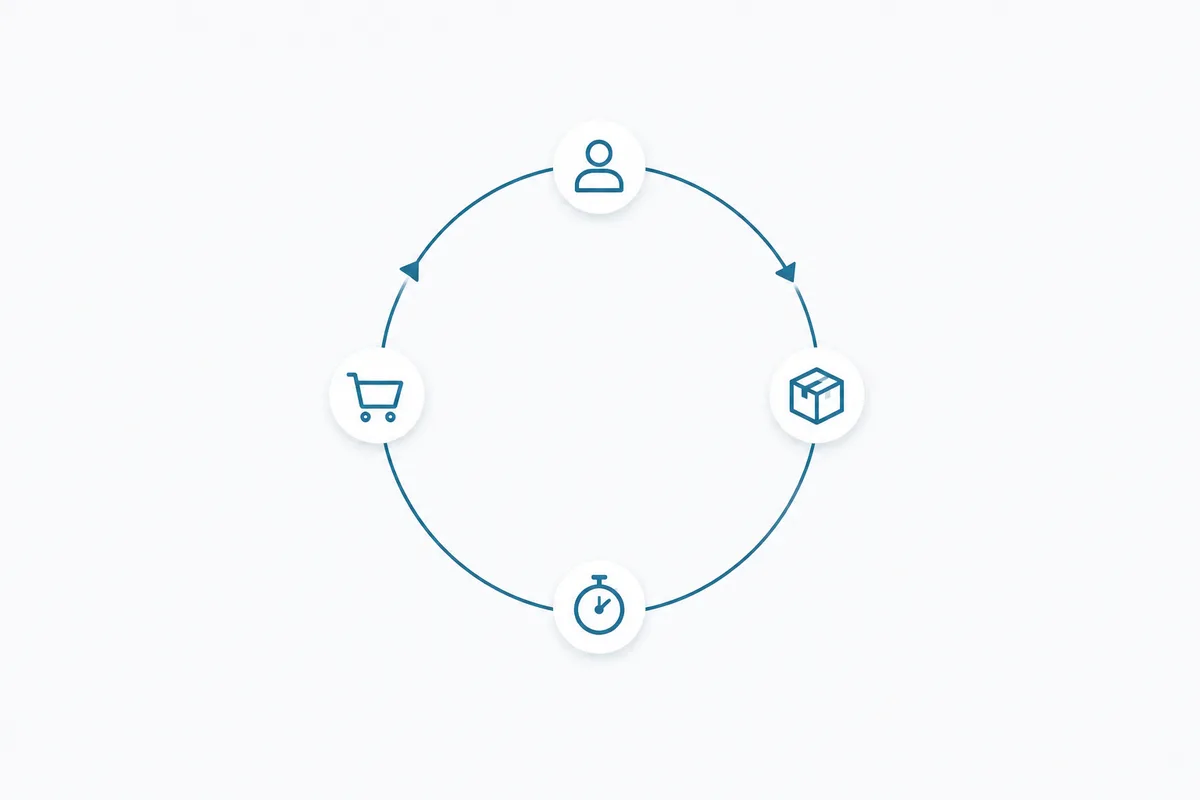
Every Q-commerce expert preaches the same gospel: “Deliver fast, customers will love you, retention will follow.” It’s intuitive, logical, and completely wrong. The very speed that attracts customers to quick commerce is destroying their ability to build lasting relationships with brands.
Traditional retail builds loyalty through experience, discovery, and relationship-building. Customers browse, compare, interact with sales staff, and develop preferences over time. Q-commerce eliminates all of these loyalty-building touchpoints in favor of speed and convenience.
The Speed-Loyalty Inverse Relationship
The faster the transaction, the less memorable the brand interaction. When customers can get products in 10 minutes, the delivery becomes the hero, not the brand. Customers remember “Blinkit delivered quickly,” not “Brand X solved my problem.”
Paradox #1: Convenience Creates Commoditization: Q-commerce’s core value proposition—instant gratification—makes brands interchangeable. When customers can get any product in 10 minutes, brand preference becomes irrelevant. They choose based on availability, price, and platform recommendation, not brand loyalty.
Paradox #2: High Intent, Low Engagement: Q-commerce customers have the highest purchase intent but the lowest engagement levels. They know exactly what they want, buy it quickly, and leave. There’s no browsing, no discovery, no relationship-building opportunity.
Paradox #3: Solving Immediate Problems Prevents Habit Formation: Q-commerce excels at solving urgent, immediate problems. But urgent purchases don’t create habits, routine purchases do. When customers only think of your brand during emergencies, you can’t build consistent purchase patterns.
The Measurement Framework That Matters in Q-Commerce
Q-commerce operates in the realm of impulse and immediacy. A customer isn’t debating loyalty—they’re solving a need in the fastest way possible. That means the usual retention metrics fail to capture what’s really happening. Marketers often fall back on familiar measures, but in Q-commerce, they don’t hold up. Repeat purchase rate looks neat in a dashboard, yet it’s too simplistic; customers may reorder because of convenience or lack of alternatives, not because they’re loyal. Customer lifetime value (CLV), the golden metric of e-commerce, is equally distorted here. High acquisition costs and rapid churn make CLV projections unreliable and misleading. Even Net Promoter Score (NPS), a staple of brand tracking, misses the mark. In Q-commerce, customers rarely form deep brand associations, let alone think about recommending their delivery choices to friends.
Q-Commerce Retention Metrics That Actually Predict
To measure what matters, we need retention signals that map to real-world Q-commerce behaviors:
Problem–Solution Consistency Rate: The strongest sign of loyalty isn’t brand love but repeat problem-solving. If the same customer keeps turning to you for the same problem—Friday night groceries, morning coffee, late-night snacking—that’s true retention.
Category Expansion Velocity: Retention isn’t just repeat orders; it’s how quickly a customer expands into new categories after acquisition. A user who starts with beverages but soon adds snacks, personal care, or household items is on a faster path to long-term value.
Temporal Purchase Pattern Stability: In Q-commerce, timing is everything. Customers who buy at predictable times—every Saturday morning, every weekday evening—are demonstrating behavioral loyalty. Stable patterns signal a habit you can reinforce and scale.
Why This Framework Matters
Q-commerce isn’t about loyalty in the traditional sense; it’s about consistency, relevance, and habit. By shifting measurement to problem–solution fit, cross-category growth, and purchase rhythm, brands can see beyond vanity metrics and uncover what truly drives retention. The result is not just cleaner dashboards but sharper strategies that convert fleeting transactions into repeatable, predictable demand.
Most Q-commerce brands will never achieve traditional retail-level customer loyalty. The channel’s core value proposition—speed and convenience—fundamentally conflicts with relationship-building. The winners won’t be those who fight this reality, but those who design retention strategies that work within it. Stop trying to build traditional loyalty in a non-traditional channel. Start building retention strategies designed for the speed-obsessed, convenience-driven reality of quick commerce.