
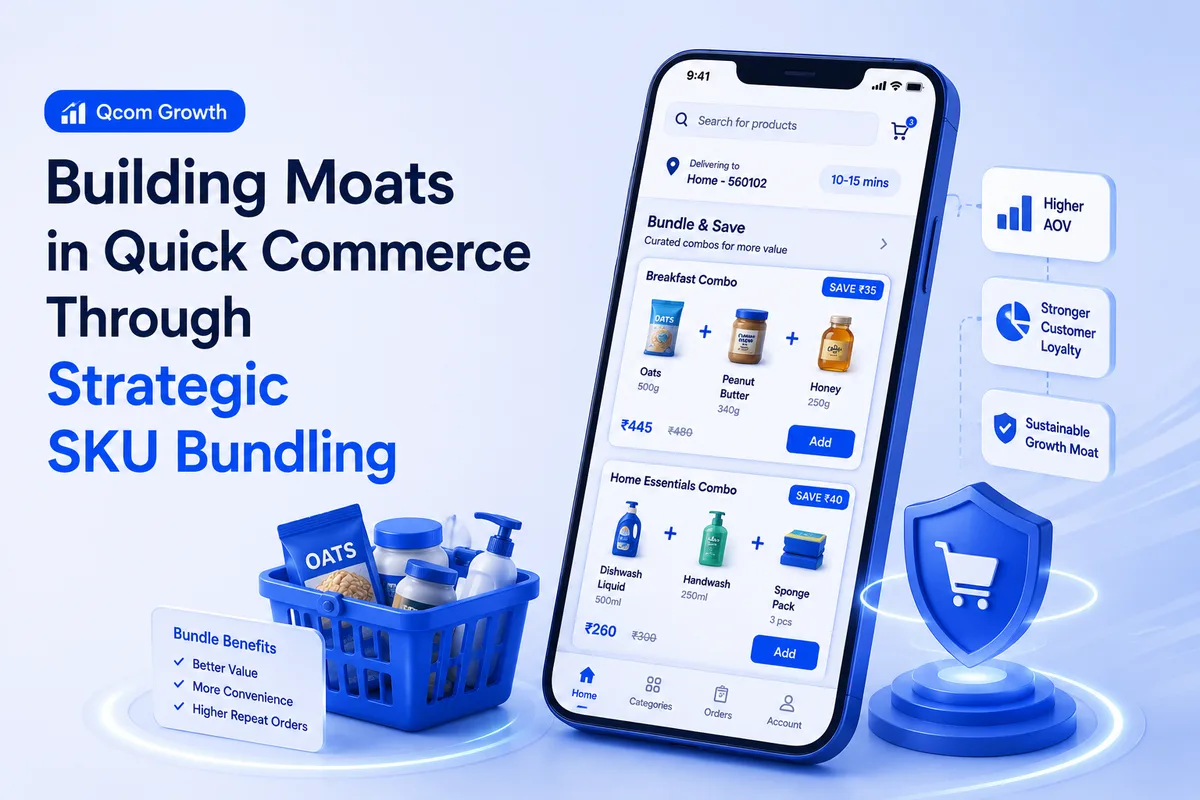
Qcom Growth
Building Moats in Quick Commerce Through Strategic SKU Bundling
In quick commerce, customers make purchasing decisions in seconds. High-velocity single SKUs often dominate these transactions, performing well on their own due to visibility, demand, and platform algorithms. However, slower-moving SKUs frequently struggle to gain traction. While discounting can temporarily boost sales, it erodes margins and fails to build long-term value. This is where strategic bundling becomes a practical, sales-driven solution.
Bundling is not a blanket growth strategy. Its real impact lies in pairing slower-moving SKUs with high-velocity products to drive incremental sales, increase average order value, and improve overall platform performance. Done right, bundles become a tactical lever that aligns with Q-commerce dynamics rather than relying solely on individual product performance.
Why Bundling Matters
In Q-commerce, attention spans are short, and discovery is limited. Customers often scroll past products unless they immediately see value. High-quality, single SKUs are more likely to stand out, but slow-moving items may remain invisible without additional incentives. Bundles can solve this problem by:
Leveraging bestseller visibility: High-velocity SKUs naturally attract attention. Pairing them with slower SKUs increases the likelihood that less popular products are noticed.
Driving incremental sales: Customers are more likely to purchase low-velocity items when they’re part of a well-structured bundle, boosting overall revenue without extra discounting.
Optimizing platform mechanics: Many Q-commerce platforms reward higher average order values and bundle attachment rates with better placement and algorithmic preference, further amplifying results.
Designing Bundles That Deliver
Not every bundle works. The key is to make them strategic, relevant, and platform-friendly. Brands should consider three principles when creating bundles:
1. High-Velocity Anchors
Start with your top-selling SKUs as the anchor for each bundle. These products already have proven demand and visibility, making them the ideal vehicle to introduce slower SKUs.
2. Complementary Low-Velocity SKUs
Pair slower-moving products with high-velocity anchors to encourage customers to try items they might not otherwise purchase. For example:
A popular coffee SKU bundled with a slower-selling snack or supplement.
A bestselling face wash paired with a low-demand moisturizer or cleanser.
This approach drives incremental sales, improves SKU velocity, and maximizes the return on inventory.
3. Platform-Optimized Structure
Bundles should be designed to maximize attachment rates and average order value, which many platforms reward. Focus on combinations that make sense for customers, are visually appealing on the app, and clearly communicate value. Avoid overcomplicating bundles, as too many items can reduce conversion likelihood.
Execution Roadmap
Weeks 1–2: Audit
Identify high-velocity SKUs and slow-moving SKUs that could benefit from bundling. Analyze competitor bundles and platform trends to understand which combinations are likely to resonate.
Weeks 3–4: Bundle Design
Develop 2–3 bundles combining anchor and slower-moving SKUs. Test different pairings, pricing, and messaging to find the most effective formats. Prioritize bundles that align with platform algorithms and customer expectations.
Weeks 5–8: Launch and Iterate
Roll out bundles starting with high-demand SKUs as anchors. Monitor attachment rates, incremental sales of low-velocity SKUs, and average order value. Refine bundles based on performance data, expanding successful formats across other categories.
Bottom line: In Q-commerce, single SKUs dominate, but strategic bundling of select products is a powerful tool to push slower-moving items, increase order value, and improve overall platform performance. Brands that use bundling thoughtfully can achieve measurable sales outcomes without relying solely on price or promotions.


