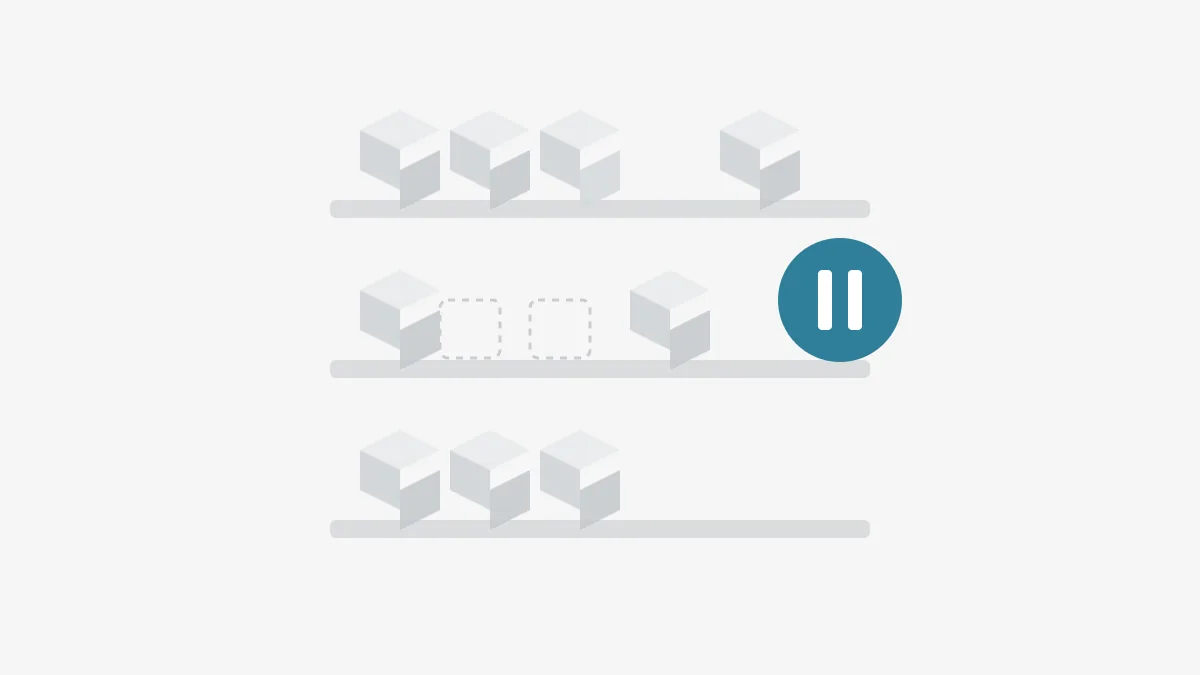
Yes, and ideally before the shelf is empty: ads on a product that is about to sell out in a dark store spend money on demand you can’t fill, and the orders they do win run the stock down faster. Pause or cut ads by store and city as stock runs low, move the budget to products and locations that can still deliver, and turn ads back on once stock is replenished.
What happens to quick commerce ads when a product is out of stock?
On Blinkit, the ad stops by itself. In a 2022 post on building its ads business, Blinkit wrote that “When products are not in inventory, the Ads don’t show up, which defeats the purpose of having them in the first place.” It also described letting brands specify multiple products, so that if one was out of stock their ads could still show the others.
We found no public documentation from Zepto or Swiggy Instamart on how their ads behave when a product runs out, so check it in your own reports: look for campaigns whose impressions dropped on the days a SKU went out of stock in a city.
Flipkart’s advice to its marketplace sellers sums up the principle: “promoting products without sufficient stock availability renders advertising efforts futile.”
Why is stock a dark-store problem, not a national one?
Because quick commerce sells from individual dark stores. Eternal, Blinkit’s parent, describes its operation as including “real-time inventory checks against a specific dark store” within a 10-minute delivery window. A product can be in stock in one store and gone in the next one across the city.
That’s also how stock reaches the shelf. On Blinkit, sellers send inventory to Blinkit’s warehouses, and Blinkit replenishes it across its dark stores. Between a warehouse delivery and the next replenishment, each store runs down at its own pace.
Ad targeting is moving to the same level. One quick commerce executive told ET Retail that platforms are increasingly “factoring in real-time SKU (stock keeping units) availability within hyperlocal delivery zones” when targeting ads.
So a national view of stock hides the problem. A SKU with healthy total inventory can still be out of stock in the stores where your ads are spending. Dark-store availability, by store and city, is the number that decides whether an ad can turn into an order.
Why pause before the shelf is empty?
If the ad stops showing at zero stock anyway, why act earlier? Because the last days before a stock-out are the expensive ones:
- Demand you can’t fill. As stock runs down, the shoppers your ads attract compete for the last few units, and the ones who arrive after them find nothing.
- Faster stock-outs. Ad-driven orders use up the remaining units sooner, which can leave the store empty before the next replenishment.
- Budget in the wrong place. Ads in stores about to run out take budget from stores that still have stock and could convert it.
Pausing early also leaves budget ready for when the product is back. Our dark store optimization playbook covers keeping stores stocked in the first place.
How do you decide when to pause?
Use days on hand, store by store. Days on hand is your stock divided by your daily run rate, and it tells you how long the shelf will last at the current pace of sales.
Set a threshold below which ads pause in that store or city, and set it from your replenishment cycle. If stock takes three days to reach a store after it’s ordered, a store with two days of cover will run out before help arrives, and more ad spend there only brings that moment forward.
Act at the level your platform allows. Blinkit’s Brand Central lets brands target by geography, from pan India to a particular city, so a city running low can be paused while others keep running. Where controls are coarser, pause the product’s campaign in the affected cities, or shift its budget to SKUs that are in stock there.
Watch your micromarkets too, starting with your highest-selling stores: they run down fastest.
What should you do with the budget you free up?
Put it where it can still earn:
- Other SKUs in the same store. If one pack size is out, promote the one that’s in stock. On Blinkit, that is what showing multiple products was built for.
- The same SKU in other cities. Move budget to cities where stock is healthy and the product is converting.
- Brand searches. Keep shoppers who search your brand name finding a product they can buy.
Don’t let the money disappear into a lower overall budget by default. A stock-out is a reason to move spend, not always to cut it.
When should you turn ads back on?
When stock has landed and settled. Restart once the store has enough days on hand to cover your normal run rate plus the extra orders ads bring, so you don’t push straight into the next stock-out.
Then check rank before raising bids. After a gap, your position may have slipped, and the first days back show whether you need a higher bid to win it back or whether demand returns on its own.
How does ShelfRadar handle stock?
ShelfRadar stops ads before stock runs out. Its ShelfAware execution reads inventory, competitor, pricing and ranking signals alongside your campaigns, and stops ads when a product is out of stock or likely to go out of stock. Campaign alerts flag campaigns that have run out of budget, so your best-converting search term doesn’t sit dark. A person on our team reviews every recommendation before it runs, and decision authority stays with you.
Frequently asked questions
Do Blinkit ads show when a product is out of stock?
In a 2022 post, Blinkit wrote that search ads don’t show when the product is not in inventory. It also let brands specify multiple products, so that if one was out of stock their ads could show the others.
Should you pause quick commerce ads before a product goes out of stock?
Yes. In the last days before a stock-out, ads attract demand you can’t fill and use up the remaining units faster. Pausing when days on hand fall below your replenishment time moves that budget to stores and SKUs that can still sell.
Can you pause quick commerce ads in one city?
Where the platform allows it. Blinkit’s Brand Central lets brands target by geography, from pan India to a particular city, so a city running low on stock can be paused while others keep running.
When should you restart ads after a stock-out?
Once stock has landed and the store has enough days on hand to cover your normal sales plus the extra orders ads bring. Check rank before raising bids, since your position may have slipped during the gap.